Friday, 10 May 2013

Creating Exhibizine 2 : 9/05

Recently, we set about getting hands on and creating our zine. We wanted a very handmade, punk-esque feel about it so therefore got togther to start gluing and cutting and folding hundreds of bits of paper.

 Having our mock zine to work from made it a lot easier as we knew what was going on the pages and just had to set about recreating this 15 times in each zine. It wasn't an easy task to say the least, especially with a member down the week before the zine fair.
Preparing ourselves!
 We spent hours cutting out, gluing, colouring and writing out each elements and detail that contibutes to Exhibizine. We underestimated how long and laborious this process was. But coffee got us though it! It was satisfying to see so many bits cut out all over the floor but then slowly disappear into our zines and see the booklets bulking up.

It got a little messy....
Although it got a little messy, we came up with an efficient method of working; we split the jobs between the three of us. First of all, we all cut out our bits (it took a lot longer than we anticipated!), then stuck in each of our bits and passed it onto the next thus creating either a full page or backgrounds of many pages complete.


Taking shape!
Coffee Break!


Getting there!

The end of one zine making day!
It was a very slow process and I am a little apprehensive we have not given ourselves enough time but we did want to wait till the lectures/workshops exploring the options had finished just to make sure we were sure about this albeit slow route.  Hopefully, in the next few days our zines should be looking more and more full and eventually complete with the reunion of our fourth member!

Thursday, 9 May 2013

Lecture: Allesandra Mostyn - Setting up a Zine Fair

Allesandra Mostyn came in and gave us a short talk about her experience with zine fairs. She began as an MMU student on what is now the graphic design course and now runs the Manchester Print Fairs!

She actually produces her own publication, The Mill Press, which she produces with her sister. The Mill Press is a quarterly journal that explores intrigue and ambiguity. They also create and publish artist books, collections of short stories, photographic prints, poster design and hand made greeting cards using found objects. 

http://www.themillpress.co.uk/files/gimgs/8_swiss-covers-smal-bl.jpg

http://www.themillpress.co.uk/files/gimgs/5_coverissue1.jpg

As a result, she sold her publication a fairs such as The Alternative Press Fair, London. At these kind of events, there were groups such aLeeds Print Co-op called Footprint. Footprint are a company that print zines for you, you send them what you want them to print, what material, quantity etc and they do it all for you! At this Press Fair though, they created a "Make a Zine in a day" workshop for people. It seems that this interaction is key in an effective and enjoyable Print/zine fair. Something we should take into consideration when setting up our space at the fair.

However, after a bad experience at a small zine fair in Trof, Manchester she decided to create her own print fair in 2011. She aimed for it to be the opposite of that fair, to be full of atmosphere, people, interest, creativity and a sense of enjoyment. The first one was held at Night and day, Oldham Street and was full of 12 sellers.
 

However, after considering the venue properly after the print fair happened, Mostyn changed to 2022NQ as Night and Day lacked the light needed. The previous two to date have carried on at 2022NQ. (Perhaps a good sign that the site choice chosen was a good one!) The move to 2022 further allowed more sellers as there was more space. Additionally, being in the heart of the Northern Quarter made it easy for people to access, especially those interested in zines/prints. 

Having visited the 2013 print fair, I was very much impressed by the use of the restricted space. It was efficient and a creative, friendly atmosphere was evident. Even the small things such as bunting added to its originality and enjoyability.

Mostyn further discussed the business aspects of zine/print fairs. For example how to price your publications, how to display and creating 'talking points' in order to create/add interest your table and make it "special". Additionally, the use of social media seems evident in creating a buzz around our print fair, therefore tweeting, using blogs and facebook rather than just posters.

In conclusion, I found this short talk useful for the zine fair. It gave us important points for how to display and set up our table. Something we hadn't quite thought about yet.

Tuesday, 7 May 2013

Progress Meeting and Creating Exhibizine 1: 07/05

This progress meeting was fairly simply. The tutors took a look at our zine progress. So far, we had made our 16 page zine but not all the pages were filled. We had some pages that were finished and some that needed work to still and some that just needed doing. 
Paper Zine from our first meeting
This is the first time the tutors had seen a tangible version of our zine, the first time it was in their hands and they could see it.  It was good to see the reaction and to see if they understood our surrealist theme which they did which was reassuring.

First attempt at consequences
Our zine coming together!
The progress meeting was also useful in regards to deadlines and how much work we need to do in order to produce artwork for the exhibition this Friday and the Zine Fair on Thursday. We realised how much we had to do if we wanted to carry forth with the handmade elements. We spent the rest of the meeting finding out what we need to photocopy and print in order to create the basis for our zines as well as finding things we need to finish.

Zine Fair poster
 I was not entirely sold on the exhibition though. Although I feel that it is good to see all the work, I felt this was the purpose of the Zine fair. I appreciate the work in booking the link gallery but I question how originally an exhibiton can be curated here. The zines are interactive and so looking at A3 versions of certain pages would not be the same as fingering several zines.

At the moment, it seems a little stressful as many of the cheap photocopiers on Oxford Rd and nearby were broken/weren't working for photocopying images which set us back quite a bit. Furthermore, the amount of time that will go into cutting/sticking and putting the Zine together. To add to this, we are a team member down and creating these zines are more expensive that we set out for it to be. We are having to pay for printing, paper and even things like glue and scissors.

Friday, 3 May 2013

Lecture: Distribution

The lecture today informed us of the many way in which we could distribute our zines and many of these way were online.

We were talked through companies such as Footprint Workers Co-operative and Cafe Royal who buy your zines off you and then sell them on after that. Once you have sold your zines to them you don't often see them after that.
Footprint Workers' Co-operative
Cafe Royal

Other ways of selling our zines were also discussed, again using online methods. These were online shops such as Etsy and Big Cartel. For these sites a paypal account is needed and all you need to do is list the items you want to sell. I think this is a brilliant idea as it has the potential to sell your zines worldwide. However, in the Unit X context, our zine will not require this as we are only making 15 and only one issue. For those who make them and have a blog, this would be a brilliant and easy way to sell more and get more hype around your zine.


Etsy


Big Cartel
Additionally, as everything becomes more technologically advanced it is a good idea to be online. Using this such as social media to promote your zine increases your audience and allows more people to see and read and maybe even buy your zine. Sites such as Cargo Collective allow you to network with other and widen your audience through more exposure.
Cargo Collective
More people also have blogs, so as well as having the shops online, it seems only logical to be able to have an online version of your zine. This is where websites such as Blurb.co.uk and Issu.com come into play. They allow people to read your zine online, it just needs to be pdf file. This wouldn't be very effective for our zine as it would make it less interactive and would remove the handmade element we are striving to achieve.

Issue.com

Blurb.co.uk

One method not discussed in the lecture was simply donating to places such as the Salford Zine Library. This is easy, free and allows people to finger through the zine and relly get a feel for it. 


Thursday, 2 May 2013

Indesign Workshop.

We  had a workshop for using Adobe Indesign, a publishing software to create works such as brochures, magazines, posters, books etc. It can also be used for using PDFs for online publications such as Issu.

http://upload.wikimedia.org/wikipedia/en/0/0f/Adobe_InDesign_CS6.png
I found this very useful, albeit I wasn't very good. We learned how to set up our files, add images and text and edit these as well as printing and saving. The effect that InDesign produces is very polished, not the 'look' exhibizine is going for; we are exploring a more punk-eque/DIY/handmade facade, hence our use of scissors and glue and cutting out images.

I feel that it was good we went to the workshop to see how to use the programme and to see the effect it produces. I enjoyed learning about it and know that if we want to use it, we can.

Wednesday, 1 May 2013

Research : Risograph


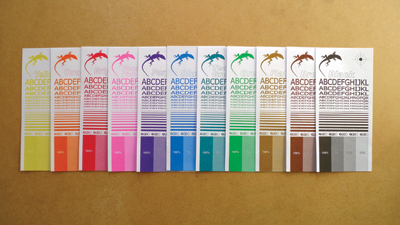
The underlying technology of a Risograph is very similar to screen printing. It uses a 'master' copy in which the other copies are created from. The original image file is put through the scanner and therefore the master created. It burns a negative of the image onto the master sheet. This is then wrapped around the print drum and ink forced through it (similar to a screen print). This all happens fairly quickly thus ideal for high volume printing for single colours. The university charges per master as that is what costs money. It costs £1 for an A3 master no matter how many copies - well up to 500. Therefore these machines are perfect for zines as we can print quickly and with a low cost.

RISO-COLOURS


The Risograph prints one colour at a time therefore, if you want two colours (or more) you have to put the paper through again. However, the Art School doesn't have all the colours therefore this would an important aspect to take into account. I am not sure how effective this would be for our zine as we have several colours in it. Additionally, its has a very handmade element of cutting and sticking which the risograph cannot reproduce despite the very rough print quality of the machine.

Progress Meeting : 31/04

Today's progress meeting was a self-directed study morning in which we set about making our mock zines. Initially, it was very intimidating, sat at the table with piles of paper, scissors, glue and bits and bobs we had planned to put in our zine. With only ideas in our head, we set about making them real and visual. In the first hour, we did find this difficult and soon warmed to it as we saw our zine taking shape.

We worked on our own pages leaving enough space for the next person to work into each page their subject. It took us quite a few hours to do what we have done so far. But this is enough for a small booklet! It's not quite 25 pages yet but it is slowly but surely getting there. It's safe to say, we, as art historians, are feeling a little more secure and safe with our zine. Touch wood!


We simply used scissors, glue and text from our essays and research as well as images in relation our essays and exhibiton proposals. We merged the subject together by working as a group to create each page. We started independently, creating one image on one page. Once we had done that, we gave it to another person to work with. For example the above example in which a wardrobe door has a hanging man, combining the clothing and wardrobe exhibition with Olivia's death row exhibition. 

Out zine follows a very punk-esque style, in that we are simply cutting and sticking onto paper. We are not using Indesign (at least not at the moment) and it is very basic and cost effective. However, it is a little time consuming, but it should be worth it!

 
 More examples of how we worked collaboratively are seen above. We also created pages by throwing ideas around and so merging the exhibitions in this manner. For example, above the people are dressed in Tiberous Beastly wallpaper. This therefore meant Rachel and I had to work together to come created the page as it wasn't simply just working over one another. 

At the end of the session, we were quite proud to see the fact we had a booklet of images that we liked. Although in the beginning it was difficult to translate our written ideas into a visual document, we hope to think we got there and the majority of our group enjoyed creating out mock-up zine!